After the 2015 election, it was pretty clear to everyone that the Trudeau 2 Liberals abandoned the strict liberalnomics of Cretien to focus on more important things like smoking dope and not doing electoral reform. Since then the Liberals have become the effective party of nothing continually running on vague notions of expanding the middle class and not being the other guys. This has been a less successful electoral strategy than dope and democracy, to say the least. Though to be fair, because they abandoned their economic legacy they had squat to run a campaign short of cooking up new exciting policy proposals which the liberals are proveably awful at. Against sinking polls and a Prime Minister who has agreed to step into his political casket, the liberals have suddenly rediscovered their passion for fiscal-focused politics; this post will highlight why the liberals abandoned this style of politics and what it means now that it has returned from the dead.
How Did We Get Here?
A rational human being may ask (fully acknowledging politics and rationality have nothing to do with one another) what drove the liberals off the path that brought them 3 majorities and one minority government all in a row from 1993 to 2006? There’s an easy answer for this, the 2011 election was an unmitigated disaster for every major Canadian political party whose specter continues to loom over our politics. For those who would rather pretend the 2010s didn’t happen, the 2011 election was when the liberals decided it would be a great idea to run Micheal Ignatieff an intellectual so unrelatable not even Rick Mercer could do anything about it; compounding this he also didn’t even have the decency to be born Quebecois which was especially offensive. These two facts would be a political death sentence in a normal election, but in 2011 the Liberals had truly run out their luck. Jack Layton who unlike Ignatieff couldn’t help but be likable was the leader of the NDP and he was really going for it. This created a perfect storm where the Liberals were reduced to third-party status but even worse for them the more left NDP suddenly became politically relevant threatening to replace them as the dominant left-wing party.
In 2013, our glorious leader Justin Trudeau entered the picture and pledged to fix the Liberal Party by shooting down the middle between the conservatives and NDP while aiming to court the youth and minority vote with progressive window dressing. From the jump, he was already doing his iconic strategy of using a lot of vague platitudes that translate to exactly nothing concrete. The Liberal caucus had been decimated by 2011 so when Justin Trudeau won the leadership he had the opportunity and mandate to remake the party in his image. When 2015 rolled around the liberal candidates were new, naive Trudeau was king, and the old guard had been left out in the cold. The classic Chretien Liberals were effectively dead at this point and the Trudeau liberals were in.
This style of Progressive-themed centrist politics served the Liberals quite well the first time but they experienced diminishing returns afterwards. They seemed to fail to appreciate that what most likely got them elected was their pledges for electoral reform and pot legalization. As for the progressive window dressing you can only talk about how progressive you are as a government for so long while doing nothing before you alienate progressives because it becomes apparent it’s a mask. Doubly bad for them was the fact moderates also alienated by the progressive messaging seeing it as too left-wing for them. Old guard liberals became alienated by the Government’s lack of action on the economy and were excluded from government positions causing preventable mistakes of inexperience leading to a public perception of incompetence. So, with no bold policy proposals their base was voting for them reluctantly only to keep the conservatives from power. You can only continue like this for so long until people start to hate you, and that is exactly what happened ultimately culminating in where we are now.
Chrétien Rises
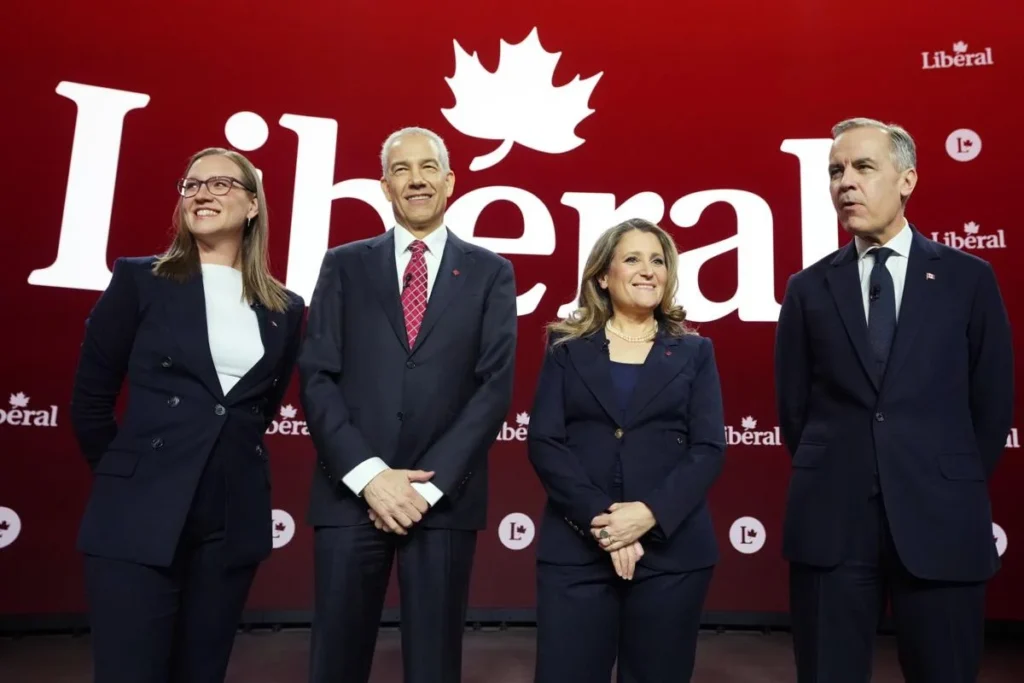
Now I thought you had to be dead to come back to life but Jean Chrétien at 91 appears to be coming back to life, if the Liberal leadership debate on February 25th was any indication his brand is back in vogue. All the candidates in some shape or form were reconciling themselves with the liberal tradition of Chretien (with the possible exception of Karina Gould who is not going to win so I am not going to talk about her). In the case of Freeland, she directly called for a return to Chretien-era economics; the others limited themselves to policies of aggressively balancing the budget and growing the economy through private-sector investment and trade. Like Chretien, they are all trying to pursue a foreign policy that will take the Americans to task rather than seek a lesser capitulation. Mark Carney who has raised millions in donations in a short amount of time who is all but certain the next liberal leader has made pledges to cut spending and return to an economically focused government (no surprise for a banker) in line with the recommendations of Chrétien for the next party leader. It is very clear that if the Liberal Party of Chrétien died in 2011 the Liberal party of Trudeau dies in 2025.
What Does This Mean Politically?
Politically, the return of the liberals to the economy means that they will be giving more space to the NDP to be the progressive party (which they seem single-mindedly focused on despite the optics). It will also potentially absorb many of the moderate voters uncomfortable with the current trajectory of the conservative party who are still mainly voting on economic issues. If current polling is anything to go on voters don’t want the conservatives (if you can believe such a completely shocking and non-apparent truth) and more just hate Justin Trudeau. If the Liberals win an economically minded centrist ticket it seems far more likely the Conservatives will be forced to return to the center to contest them and have policy proposals that don’t just amount to culture war ammunition.
What Does This Mean For Federalism?
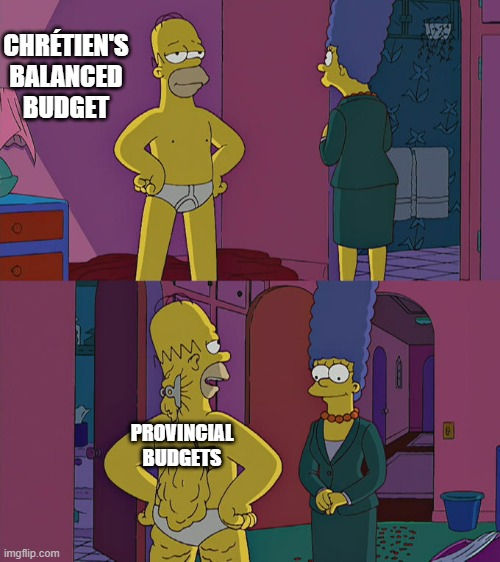
On a Federation level, Mark Carney has been talking about using federal emergency powers to force infrastructure and energy projects through provinces which signals a return to a more confrontational relationship between Ottawa and the provinces. Not helping the relationship between Ottawa and the provinces will be the likely return to the federal financial tactics of the old liberals.
The federal government in 1993 was in dire straits (not the band that was more a Pierre Trudeau thing than a Chretien thing) the budget was completely unbalanced and tax cuts accompanied by economic turmoil caused in part by NAFTA caused the Canadian government’s highest debt to GDP ratio it had ever had. In other words, Canada was taking economic tips from Greece. Chrétien solved this crisis but not without huge cost, he cut the spending on social services, and the military. Then most concerning of all he transferred much of the burden of paying for social programs to the provinces by slashing transfer payments. In short, he kinda cheated and hid the deficits elsewhere while proclaiming fiscal responsibility.
What is most concerning is that much of what we ascribe to Chrétien is the work of his finance minister and successor Paul Martin who wanted to make much greater cuts to provincial transfers. Chrétien stopped Martin because he strongly believed that the federal government should actually do things so the country doesn’t fall apart. This is concerning is because Mark Carney who is on record as sounding unsympathetic to the provinces has a much closer relationship with Paul Martin than Chrétien. This means that as the provinces are dealing with funding shortages for healthcare and other social programs and an upswell in hostility towards Ottawa, a potentially uncooperative prime minister is entering the picture, which of course, is cause for concern considering the whole national unity thing needed to deal with our aggressive southern neighbour.
Liberalnomics in action
A return to old fiscal policy will likely be good for private sector growth in the economy. The talk of the town in Liberal HQ is Carney’s slogan “Spend Less Invest More” There is no reason why this policy similar to that of Chrétien won’t lead to growth in the same way. There is also the problem of low economic productivity that is finally being addressed among the candidates. This will be accompanied by the customary neo-liberal deregulation of everything that moves or doesn’t and more tax cuts for the middle class (which goes without saying at this point). In other words, Liberalnomics does a lot of stuff to benefit the Private sector while absolutely thrashing everything else and that’s pretty good if your into that sort of thing…